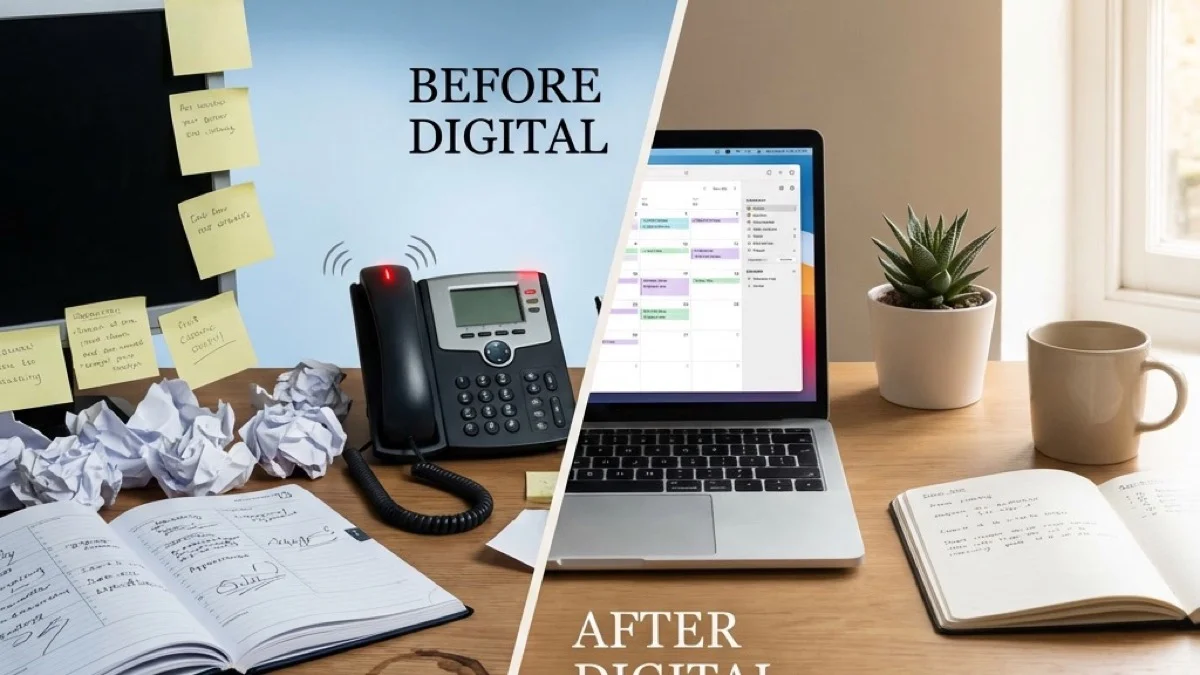
Where Does Your Time Actually Go?
Ask any service business owner how they spend their day, and scheduling administration will rank uncomfortably high. Answering phone calls, checking availability, writing down appointment details, sending confirmations, following up on no-shows, managing cancellations, and rescheduling — it adds up fast. Studies of small service businesses show that manual scheduling consumes an average of 8-12 hours per week. That is an entire workday spent not serving clients, not growing the business, and not doing the work you are actually good at.
Breaking Down the 8-12 Hours
Where exactly do those hours go? Answering scheduling-related phone calls: 3-4 hours weekly. Manually entering appointments and checking for conflicts: 1-2 hours. Sending confirmation messages: 1 hour. Following up on unconfirmed bookings and no-shows: 1-2 hours. Managing rescheduling and cancellations: 1-2 hours. Updating team members about schedule changes: 30 minutes to 1 hour. Each task seems small on its own, but collectively they represent a significant productivity drain.
Automating the Repetitive Work
Online booking automates the most time-consuming parts of this cycle. When a client books through LoraBooking, the appointment is created, the calendar is updated, the confirmation is sent, and reminders are scheduled — all instantly and without any staff involvement. This is not about replacing human interaction; it is about eliminating the repetitive mechanical work so your team can focus on the interactions that actually matter.
Staff Allocation: Doing More With Your Team
When front-desk staff spend less time on the phone managing appointments, they can focus on in-person client experience, administrative tasks that require human judgment, and revenue-generating activities. One dental clinic reported that after implementing online booking, their receptionist was able to take on patient intake coordination and insurance processing — work that had previously required a second hire. The booking system did not replace anyone; it made the existing team more effective.
Data-Driven Scheduling Decisions
Manual scheduling produces no data. Online booking produces a wealth of it. Which days are busiest? What services are most popular? When do cancellations peak? What is your average lead time from booking to appointment? This information lets you make informed decisions about operating hours, staffing levels, service offerings, and marketing timing. LoraBooking provides clear scheduling analytics that turn your calendar into a business intelligence tool.
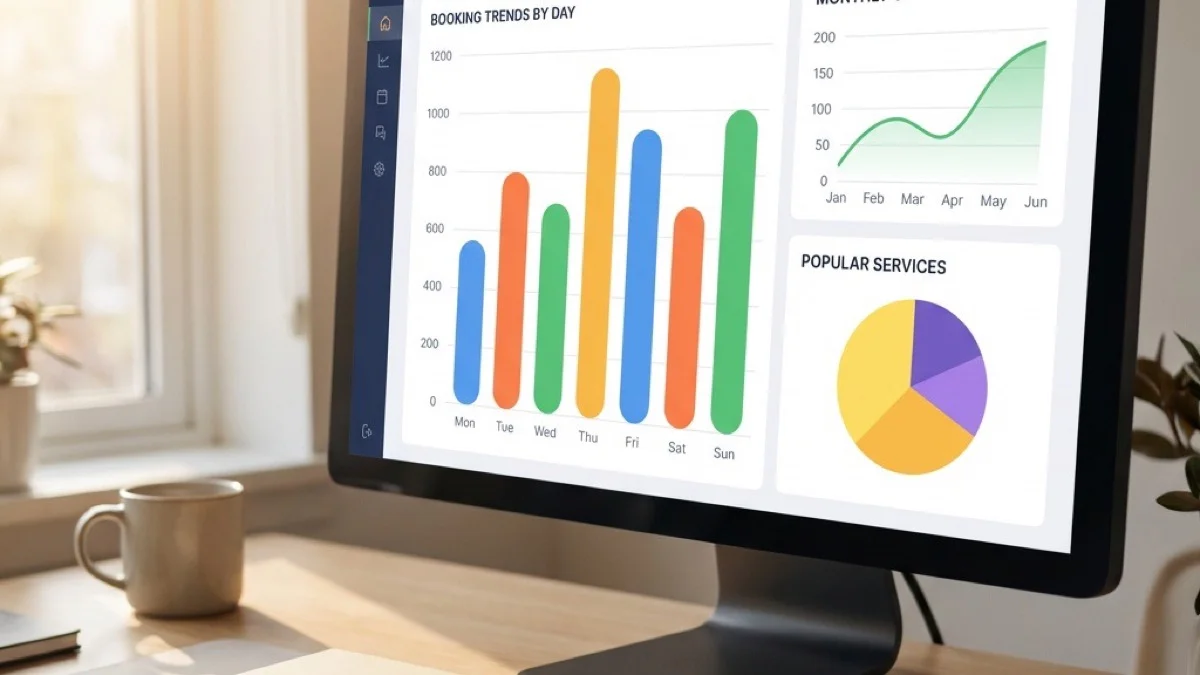
Measuring Your Productivity Gains
The impact of switching to online booking is measurable from week one. Track three metrics before and after: time spent on scheduling-related tasks per week, number of bookings processed per day, and staff availability for non-scheduling work. Most businesses see phone call volume drop by 40-60% within the first month. Total scheduling administration time typically decreases by 60-80%. These are not marginal improvements — they are transformative.
The Compounding Effect of Saved Time
Saving 8 hours per week sounds impressive on its own, but the real impact compounds over time. Over a year, that is 400+ hours — ten full work weeks returned to your business. Imagine what you could do with ten extra weeks: launch a new service, improve client relationships, train your team, or simply reduce stress and avoid burnout. The productivity gains from online booking extend far beyond the scheduling desk.
Common Objections (And Why They Do Not Hold Up)
Some business owners hesitate to adopt online booking because "my clients prefer to call" or "our scheduling is too complex." The data consistently shows otherwise. When given the option, 60-70% of clients prefer to book online — including older demographics. And complexity is actually a reason to use an online system, not to avoid one. The more variables involved in your scheduling, the more a structured system prevents errors and saves time.

Getting Started With LoraBooking
The transition from manual to online booking does not require a dramatic overhaul. Start by setting up your services and availability on LoraBooking. Add your booking link to your website and email signature. Let clients choose between online booking and calling during the transition period. Within a few weeks, you will see the shift happen naturally as clients discover how easy online booking is — and your team discovers how much time they have been missing.